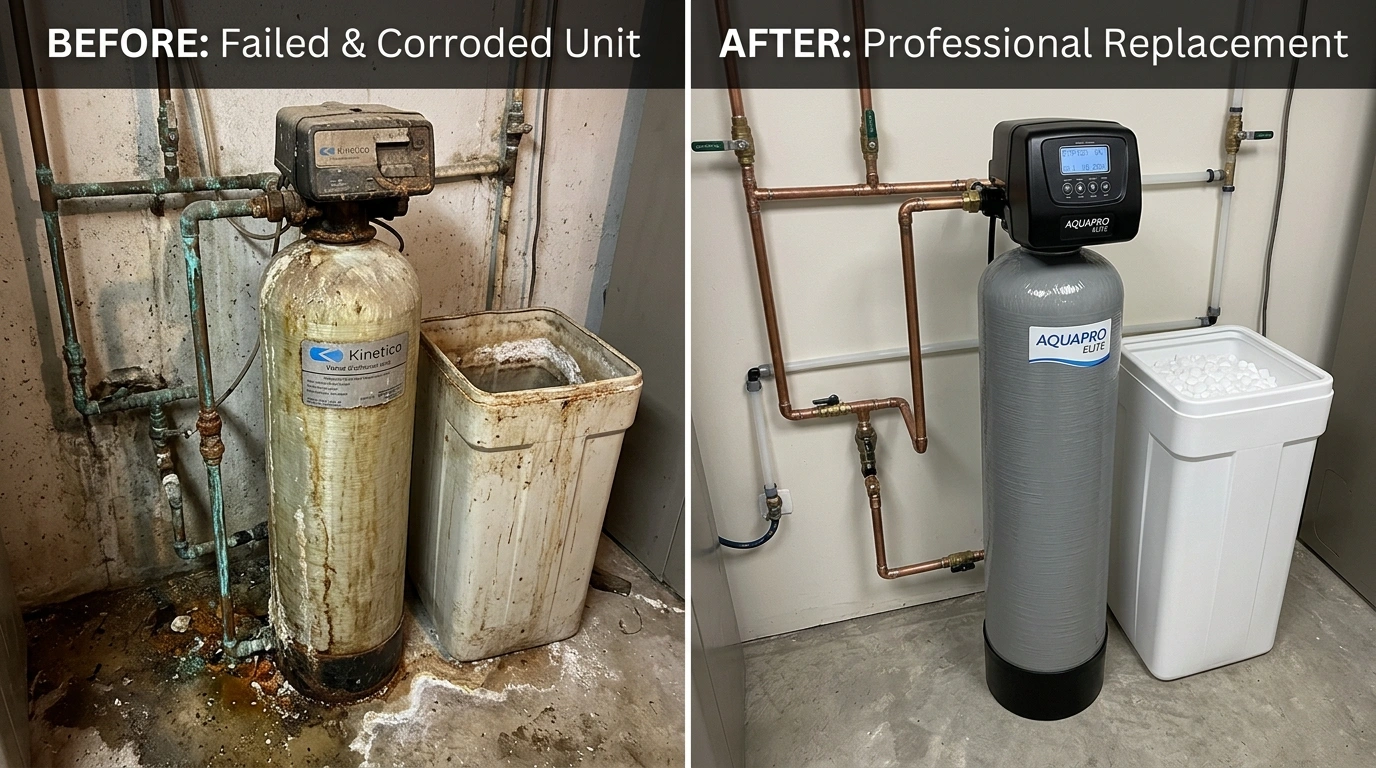
Prevent Water Softener Failures with Routine Service in Denton
Periodic inspection and testing can help identify salt, brine, valve, drain, and resin problems before they become more disruptive.
Unlike certain regulated plumbing assemblies, a typical residential water softener does not usually require annual municipal certification. However, periodic maintenance and performance checks can help homeowners avoid wasted salt, recurring hard-water symptoms, leaks, overflow issues, and premature replacement decisions.
A proper water-softener service visit focuses on the actual unit, the property's water conditions, the system's regeneration performance, and the plumbing connections around it. Square Dent Plumbing can inspect the equipment and explain whether maintenance, repair, re-bedding, reprogramming, or replacement is the most sensible next step.
| Maintenance Task | Description | Typical Timing | Practical Impact |
|---|---|---|---|
| Visual Inspection | Check the softener, brine tank, fittings, bypass, drain line, and surrounding area for leaks or damage | During service or when symptoms appear | Helps identify leaks, corrosion, loose fittings, or tank concerns early |
| Water-Performance Check | Compare hardness or treatment performance before and after the system when appropriate | When hard-water symptoms return | Confirms whether the unit is actually softening water |
| Regeneration Review | Check settings, cycle behavior, brine draw, and visible control concerns | During diagnosis or maintenance | Helps identify why a unit may not use salt or regenerate correctly |
| Brine-Tank Inspection | Check salt condition, water level, salt bridge, salt mush, float components, and brine line | As needed | Helps prevent poor brine production and regeneration failure |
| Cleaning & Minor Adjustments | Clean or adjust serviceable components where appropriate | During a service visit | May restore performance when the underlying problem is repairable |
| Repair or Replacement Recommendation | Explain repairability, parts availability, system age, tank condition, and replacement choices | After diagnosis | Helps avoid unnecessary replacement or repeated short-term fixes |
Helpful Timing for Denton Homeowners
- Check salt condition regularly rather than waiting until the unit stops working.
- Schedule a performance check if water spots, scale, cloudy dishes, or soap scum return.
- Inspect garage or utility-room systems after a North Texas freeze, especially if plumbing or drain connections are exposed.
- Request service quickly if the brine tank overflows, the system leaks, or water runs continuously to the drain.
- Ask for a water test before replacing an old system or selecting a new whole-house softener.
Maintenance note: The right service interval depends on the system model, household size, water use, incoming-water conditions, salt use, and past performance. A softener that uses unusually large amounts of salt, regenerates too often, or no longer reduces hardness should be checked.
Cost note: Water-softener service costs vary based on the failure, access, unit type, parts availability, water-testing needs, condition of the tank/resin, and whether repair or replacement is appropriate. Square Dent Plumbing can explain the work recommended before major repair or replacement decisions.