Bathtub-to-Shower Conversion in Denton, TX — Walk-In Shower Options for a More Practical Bathroom
Denton bathroom plumbing and shower-remodel solutions designed around safety, drainage, waterproofing, and how you use the room every day.
When you search for a tub-to-shower conversion in Denton, TX, you are usually not looking for a cosmetic change alone. You may have a bathtub nobody uses, a high tub wall that is becoming harder to step over, a cracked fiberglass surround, an aging shower valve, a slow drain, or a concern about what is hiding behind the wall.
Square Dent Plumbing helps Denton homeowners plan bathtub-to-shower conversions with the plumbing details in mind first. Before recommending a shower pan, wall system, tile, glass, fixtures, or accessibility feature, we assess the existing tub area, drain position, water lines, shower valve, wall condition, floor structure, and moisture-management needs.
Whether you want to replace an unused bathtub with a walk-in shower, explore a low-threshold shower, compare a curbless shower with a standard shower pan, or update an aging bathroom before it develops into a leak problem, our team can help you understand the practical choices.
- Tub-to-shower conversion planning for Denton homes, rentals, and property-managed residences
- Shower-drain, shower-valve, water-line, and bathroom-plumbing assessment
- Walk-in shower, low-threshold shower, and accessibility-focused option guidance
- 24/7 emergency plumbing support for active tub, shower, drain, and water-leak problems
Call (940) 413-0111 to discuss bathtub removal, walk-in shower options, drain location, shower plumbing, and bathroom-conversion planning in Denton.
Request a Tub-to-Shower Conversion Assessment
Fill out the form below and we'll contact you immediately!
Tub-to-Shower Conversion Planning Backed by Denton Plumbing Experience
Work with a local team that looks beyond the visible tub and considers the plumbing, drainage, wall, floor, and moisture conditions that affect the finished shower.
A tub-to-shower conversion is not simply a matter of removing a bathtub and installing a new shower wall. The existing tub drain may be near one end of the alcove while the selected shower pan or linear drain may need a different position. Older homes can reveal aging drain materials, supply piping, hidden staining, damaged wallboard, or flooring concerns after demolition begins.
Square Dent Plumbing approaches bathroom conversion work as a plumbing and remodeling project. We help homeowners understand what can remain in place, what may need to move, and what could affect the final scope after the tub is removed.
Local Coverage
Serving Denton, Denton County, and surrounding North Texas communities.
Plumbing-Focused Evaluation
Detailed review of drains, shower valves, water lines, and fixture connections.
Shower Options Explained
Clear explanations of low-threshold, walk-in, and curbless shower considerations.
Emergency Availability
Emergency plumbing when an active leak, drain backup, or water-damage concern cannot wait.
Written Scope Review
Written discussion of project scope, options, and factors that can affect the final plan.
Bathroom Conversion Service Near Denton Neighborhoods, Homes, and Community Hubs
Helping homeowners throughout North Denton, Southridge, Pecan Creek, Oakmont, Rayzor Ranch, and surrounding Denton County communities.
Denton homes range from established properties near Historic Downtown Denton and the Denton Square to newer households near Rayzor Ranch, Pecan Creek, Southridge, Oakmont, and North Denton. That variety matters during a bathroom conversion because home age, slab or framed-floor construction, existing drain location, plumbing materials, bathroom layout, and prior remodel work can all affect the best path forward.
Square Dent Plumbing provides bathroom plumbing for shower remodel projects in Denton and throughout nearby North Texas communities. We help homeowners determine whether an existing tub alcove can become a practical walk-in shower, whether a drain can stay where it is, and whether a low-threshold or curbless layout is realistic for the bathroom.
Specialized Tub-to-Shower Conversion Planning for Drains, Valves, Walls, and Waterproofing
Denton homeowners need more than a general handyman when a bathroom project involves plumbing connections, drainage, water control, and moisture management.
The visible finish is only one part of a successful bathtub-to-shower conversion. Behind the walls and beneath the tub, the project may involve a shower drain, P-trap, waste pipe, water lines, shower valve, wall substrate, floor preparation, ventilation, and waterproofing details.
Square Dent Plumbing helps evaluate the practical parts of the conversion before work begins. If your existing tub has a drain at one end, for example, the selected shower pan and desired shower layout may or may not align with that location. An offset shower pan can sometimes reduce drain relocation, while a centered drain, linear drain, or curbless shower may require a different approach.
Our tub-to-shower conversion planning focuses on:
- Shower-drain placement, condition, access, and potential relocation
- Existing tub plumbing, water-supply lines, shower valves, and fixture updates
- Existing drain-pipe material and condition when accessible
- Wall, floor, and moisture-related concerns discovered after tub removal
- Shower-pan, tile, wall-panel, glass, seating, niche, and handheld-shower planning
- Grab-bar backing and other accessibility preparation before walls are closed
- Plumbing coordination for bathroom remodeling and shower replacement projects
What Happens When an Old Bathtub No Longer Fits Your Routine?
A tub that is rarely used, difficult to step over, cracked, leaking, or hard to clean can make the bathroom less functional than it should be.
Many homeowners start researching a walk-in shower installation in Denton, TX because the current tub no longer works for their household. The issue may be comfort, safety, cleaning, water damage, outdated fixtures, or the simple fact that the tub has become storage instead of something anyone uses.
A tub-to-shower conversion can create a more practical bathing area, but it should begin with a close look at the existing plumbing and room conditions. Choosing a shower style before understanding the drain, floor, wall, and valve conditions can create avoidable changes later.
Common tub-to-shower conversion concerns:
- A high tub wall feels difficult or uncomfortable to step over
- The household wants a lower-entry shower for aging in place
- The tub is cracked, rusted, stained, worn, or difficult to clean
- The tub surround, grout, caulk, or wall shows signs of moisture-related wear
- The shower valve is outdated, leaking, difficult to control, or poorly placed
- The drain is slow, backed up, corroded, or located where the new shower design does not need it
- The bathroom has an unused tub but needs more shower space
- The homeowner is concerned about preserving one bathtub for children, guests, or future resale
Prevent Scope Surprises With a Detailed Tub-to-Shower Assessment
A clear pre-construction review helps identify drainage, plumbing, floor, wall, and accessibility issues before a new shower is selected.
Unlike an annual inspection service, a tub-to-shower conversion is a project-specific evaluation. The most useful first step is understanding the existing bathroom and identifying the elements that can affect design, price, timeline, and construction planning.
Square Dent Plumbing can review the existing tub area before work begins and explain the practical decisions that may shape your shower conversion.
| Assessment Task | What We Review | Why It Matters |
|---|---|---|
| Existing Tub and Alcove Review | Tub footprint, wall layout, opening, fixtures, and access | Helps determine what shower size and layout can work |
| Drain Location Check | Existing drain position, waste pipe access, and alignment | Shows whether the selected shower pan may need drain changes |
| Shower Valve and Water-Line Review | Valve age, placement, supply connections, and fixture options | Helps plan controls, handheld showers, and plumbing updates |
| Wall and Floor Condition Review | Visible damage, softness, staining, movement, or prior repairs | Helps identify areas that may need attention after tub removal |
| Waterproofing Plan | Shower pan, wall substrate, transitions, niches, corners, and penetrations | Helps manage water at the finished shower area |
| Accessibility Review | Threshold height, entry clearance, seat, handheld shower, and grab-bar backing | Helps match the shower to current and future household needs |
| Permit and Inspection Discussion | Scope-specific plumbing, electrical, mechanical, or structural changes | Clarifies whether additional project steps may apply |
Planning considerations:
- Choose the shower style after evaluating the drain location and floor conditions
- Decide whether the household needs a low-threshold shower, a curbless shower, a bench, or future grab-bar backing
- Consider whether the home should retain at least one usable bathtub
- Review wall panels, tile, shower pans, fixtures, glass, ventilation, and storage as part of the same overall plan
- Allow for the possibility that old plumbing, wall damage, or floor concerns may become visible only after demolition
Important scope note: A shower conversion may involve a straightforward replacement in one home and a more involved plumbing or floor project in another. Existing conditions—not a generic template—determine the final scope.
Who Needs a Tub-to-Shower Conversion in Denton?
From homeowners planning ahead for easier bathing to families updating a damaged or unused bathtub area.
A bathtub-to-shower conversion can make sense for many Denton households, but the best choice depends on how the bathroom is used now and how it may need to work in the future.
Square Dent Plumbing helps homeowners compare shower conversion options with the existing plumbing and room layout in mind.
Homeowners we commonly help:
Homeowners with a tub that is rarely or never used
Older adults planning for easier shower access and long-term comfort
Adult children helping parents update a bathroom for changing mobility needs
Families with a cracked fiberglass tub, worn surround, leaking valve, or recurring drain concern
Homeowners replacing an outdated tub alcove with a shower that is easier to clean
Households considering a low-threshold shower, handheld showerhead, or shower seat
Property owners planning a practical bathroom update before listing, renting, or moving into a home
Homeowners deciding whether to keep one bathtub elsewhere for children, guests, or resale considerations
How North Texas Construction, Plumbing, and Weather Can Affect a Tub-to-Shower Conversion
Slab foundations, older drain materials, freeze exposure, ventilation conditions, and prior remodel work can influence the right conversion approach.
Denton-area homes do not all have the same bathroom construction. Some properties have concrete slab foundations, while others have framed floors or accessible plumbing below the bathroom. Some homes may contain older drain or water-supply materials, while others may have newer plumbing from a previous remodel.
North Texas weather and household conditions can also matter. Occasional freeze events can affect vulnerable plumbing, and humid bathroom conditions can make ventilation, wall protection, and routine maintenance especially important.
Local planning factors:
- Concrete slab bathrooms: A curbless shower may require enough floor depth for the shower pan, drain connection, and proper slope. In some cases, a low-threshold design may be more practical than a fully curbless entry.
- Framed floors or second-story bathrooms: Drain access can differ from slab construction and may affect whether pipes can be modified from below.
- Older homes: Tub removal may reveal older cast-iron, galvanized, copper, or mixed-material plumbing that deserves evaluation.
- Exterior-wall plumbing: Freezing conditions can affect exposed or vulnerable supply lines, depending on the home's configuration.
- Ventilation: A functioning bath fan and proper use habits help control everyday moisture after a shower remodel.
- Existing water damage: Soft flooring, swollen walls, staining, or recurring leaks should be assessed before finishes are installed.
Common Walk-In Shower and Tub-to-Shower Conversion Choices in Denton
The right shower design depends on your existing bathroom, accessibility goals, cleaning preferences, drain location, and available floor depth.
Different homeowners want different outcomes. Some want to remove an unused tub and install a simple shower pan with wall panels. Others want a low-threshold entry, custom tile, a linear drain, a handheld showerhead, a bench, or a more open glass layout.
| Conversion Option | Typical Use | Main Consideration | Potential Benefit |
|---|---|---|---|
| Standard Shower Pan Conversion | Replacing a tub in the existing alcove | Drain alignment and wall system selection | Practical, familiar shower layout |
| Low-Threshold Shower | Easier step-in access without a fully recessed floor | Entry height and bathroom floor transition | Improved everyday access |
| Curbless Shower | Aging-in-place and streamlined entry goals | Floor depth, slope, drain, slab or subfloor conditions | Minimal step-over entry when feasible |
| Tile Shower | Custom size, finish, niche, bench, or layout | Waterproofing, slope, substrate, and installation details | Flexible design options |
| Wall-Panel Shower | Lower-grout and easier-cleaning surface preference | Product fit, seams, fixtures, and accessory planning | Streamlined maintenance |
| Fixed Glass Panel | Open visual appearance with splash control | Bathroom clearance and water containment | Can make a smaller bathroom feel more open |
| Sliding or Hinged Shower Door | Enclosed shower entry | Door swing, access clearance, and cleaning preferences | Defined water barrier and entry option |
| Handheld Shower and Seat | Accessibility and bathing flexibility | Valve, diverter, seat, and wall-support planning | Easier rinsing and adaptable use |
| Grab-Bar Backing | Future-accessibility preparation | Must be planned before walls are finished | Allows safer future accessory placement |
A professional assessment helps determine whether the existing tub location can support the shower style you prefer without creating unnecessary plumbing or floor changes.
Our 6-Step Tub-to-Shower Conversion Process
Know what to expect from the first conversation through the final walkthrough.
Initial Call and Bathroom Goals
We discuss your current tub, the problems you want to solve, your preferred shower style, accessibility needs, and whether you are concerned about drain relocation, leaking, damaged surfaces, or preserving another bathtub in the home.
On-Site Bathroom Assessment
Our team evaluates the tub area, existing drain location, shower valve, water lines, wall layout, floor conditions, visible moisture concerns, and access considerations.
Conversion Options and Scope Review
We explain practical options such as a standard shower pan, low-threshold shower, wall panels, tile, fixed glass, shower door, handheld shower, bench, or future grab-bar backing.
Plumbing, Drainage, and Waterproofing Planning
If the drain, valve, water lines, or floor need changes, we outline the work involved. We also discuss the shower's water-management approach, including the pan, wall system, transitions, and drainage design.
Project Scheduling and Required Coordination
We coordinate the agreed scope, materials, site protection, work sequence, and any applicable permit or inspection steps. For Denton homes, the permit path depends on the actual alteration scope.
Installation and Final Walkthrough
After the work is completed, we review the finished shower area, fixtures, drainage, access features, maintenance considerations, and any care information associated with the installed materials.
What Is Included in a Tub-to-Shower Conversion Assessment?
Square Dent Plumbing helps you understand the plumbing, construction, and finish elements that should be considered before approving a bathroom conversion.
Every tub-to-shower project is different. A small tub alcove replacement may require a different scope than a curbless shower conversion, a bathroom with visible water damage, or a project involving drain relocation, a new valve, tile, glass, and accessibility upgrades.
Conversion assessment checklist:
- Review of the existing bathtub, alcove, wall layout, and bathroom access
- Evaluation of the current tub drain and likely shower-drain options
- Review of shower-valve location, fixture needs, and water-supply connections
- Discussion of existing pipe materials and accessible plumbing conditions
- Identification of visible moisture damage, staining, soft areas, or repair concerns
- Discussion of shower-pan, tile, wall-panel, and water-management options
- Review of low-threshold, curbless, handheld-shower, seat, and grab-bar-backing preferences
- Discussion of shower-door, fixed-glass, curtain, and entry-clearance choices
- Explanation of factors that may affect demolition, plumbing, waterproofing, wall repair, and final finishes
- Scope-specific permit and inspection discussion when applicable
Key Advantages of Planning Your Shower Conversion With Square Dent Plumbing
Practical bathroom improvements begin with clear information about drainage, fixtures, water management, and the existing room.
A new shower should work well after the final tile, wall panels, or glass are installed. That means considering what is behind the wall and under the floor—not just the finish you can see.
Plumbing-Focused Review
Detailed evaluation of shower drains, water lines, P-traps, and shower valves.
Walk-In Shower Options
Options that consider step-in height, entry space, seating, and handheld fixtures.
Waterproofing Planning
Clear explanation of shower-pan, drain, wall, and waterproofing decisions.
Aging Tub Assessment
Identifying when an aging tub, leaking fixture, or damaged surround may need more than cosmetic replacement.
Emergency Support
Denton-based bathroom plumbing support with emergency service available for active water or drainage problems.
Comprehensive Project Planning
Planning that considers your household's need for at least one bathtub, future accessibility, and everyday maintenance.
Tub-to-Shower Conversion Results for Denton Bathrooms
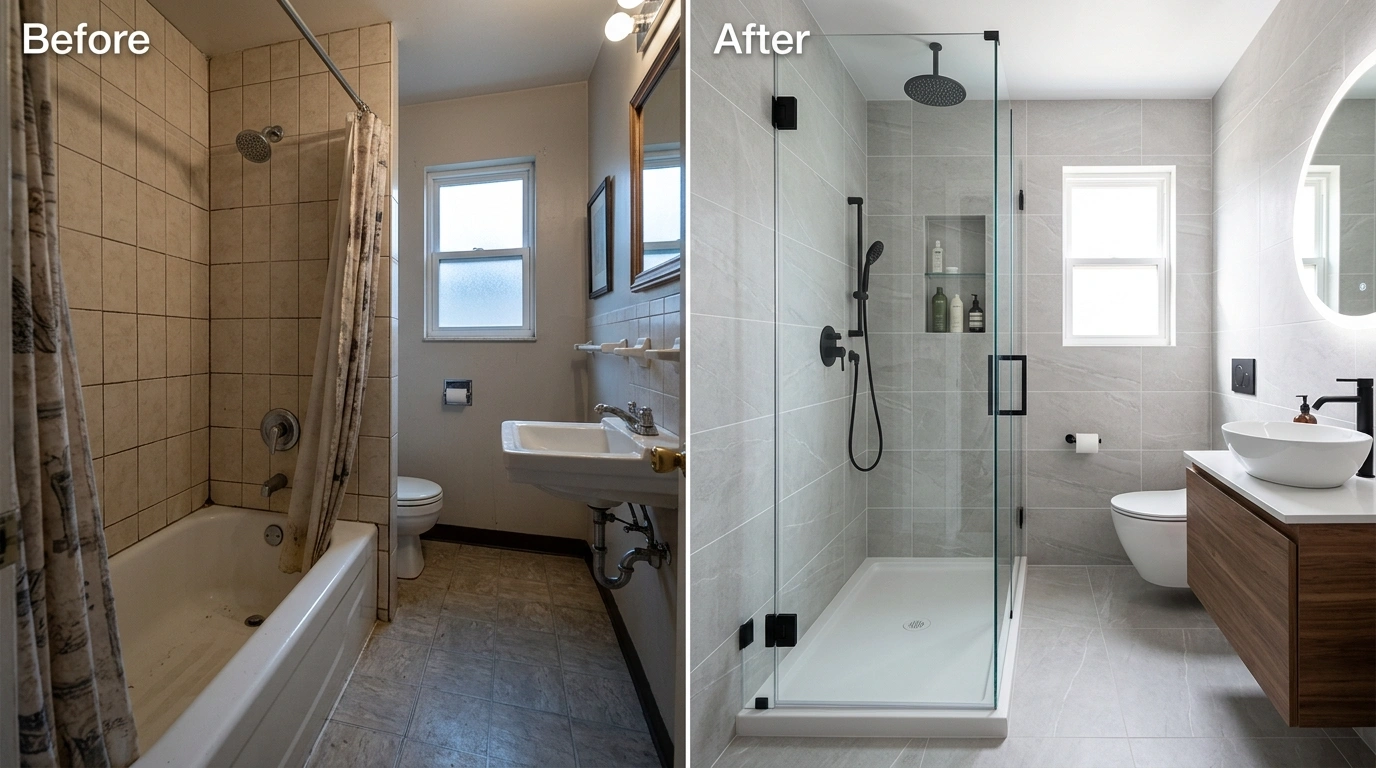
What changes when the tub area is evaluated, updated, and rebuilt around how the household uses the bathroom.
Many homeowners begin with an old alcove tub that takes up space, feels difficult to step over, has worn fixtures, or no longer fits their routine. A properly planned shower conversion can turn that area into a more usable bathing space while addressing the plumbing and moisture-management details required by the final design.
Before-and-after outcomes may include:
An unused, stained, cracked, or difficult-to-clean bathtub.
A shower layout selected around the existing room, drain, and household needs.
A high tub wall that is uncomfortable to step over.
A low-threshold or walk-in shower option, where feasible for the property and final scope.
Old tub fixtures, a leaking valve, or an unreliable drain.
Updated plumbing components and fixtures as included in the project plan.
Uncertainty about what is behind the wall or beneath the tub.
A clearer understanding of the bathroom's plumbing, wall, floor, and moisture conditions.
A bathroom that no longer supports aging-in-place goals.
A shower plan that can include seating, handheld controls, non-slip material options, and preparation for grab bars.
How We Plan Tub-to-Shower Plumbing, Drainage, and Waterproofing
Every shower needs a compatible system for water supply, drainage, wall protection, floor slope, and finished materials.
A durable shower is not created by tile or wall panels alone. The finished surface must work with the shower pan, drain, plumbing connections, wall substrate, waterproofing materials, transitions, fixtures, and ventilation plan.
Square Dent Plumbing discusses the appropriate work sequence and material decisions for your specific bathroom rather than using a one-size-fits-all approach.
Key planning and installation considerations:
- Shower-pan selection based on available size, entry preference, drain location, and floor conditions
- Drain assembly and drainage-path planning for the selected shower style
- Shower-valve replacement, relocation, or fixture upgrade when included in the scope
- Water-line review and plumbing connection planning
- Wall substrate and waterproofing approach appropriate for the chosen shower finish
- Sealing and transition planning around corners, niches, penetrations, and shower fixtures
- Floor-slope planning so water is directed toward the drain
- Consideration of tile, grout, wall panels, solid-surface materials, or other selected finishes
- Shower-door or fixed-glass planning that accounts for splash control and bathroom clearance
- Ventilation coordination when the project scope includes fan or electrical changes
Note: A shower's exact material system and method should be selected for the individual bathroom, product requirements, and approved project scope.
Should You Repair a Failing Bathtub or Choose a Tub-to-Shower Conversion?
The right choice depends on the tub's condition, your household's needs, the existing plumbing, and what you want the bathroom to do long term.
Some bathtub and shower problems can be repaired without a full conversion. A leaking valve, drain issue, deteriorated caulk, minor fixture problem, or isolated component failure may be resolved through targeted plumbing or repair work. In other cases, the tub is outdated, damaged, difficult to use, or simply no longer appropriate for the household.
| Existing Situation | Repair May Be a Good Option | Conversion May Be Better |
|---|---|---|
| Leaking shower valve or faucet | The tub and surround are otherwise sound | The walls are already being opened and the bathing area needs a larger update |
| Slow tub drain | The issue is localized and the tub still meets household needs | The tub is unused and a more practical shower layout is preferred |
| Worn caulk or grout | No hidden damage is present and the surfaces are stable | Moisture has affected walls, flooring, or the surrounding enclosure |
| Cracked or stained fiberglass tub | A limited repair can restore function | The tub is repeatedly failing, hard to clean, or no longer fits accessibility needs |
| High tub wall | The household remains comfortable with tub use | Easier shower entry, seating, or aging-in-place features are a priority |
| Only bathtub in the home | Repair may preserve flexibility for children or resale | Another suitable tub exists and the household prefers a shower in this bathroom |
A conversion may be worth considering when:
- The tub has become storage rather than a bathing fixture
- The household needs easier access than a high tub wall provides
- The existing tub or surround is significantly worn, damaged, or repeatedly leaking
- The bathroom is being updated anyway and plumbing access is already part of the project
- You want a shower that supports future seating, handheld fixtures, or grab-bar installation
- You have considered whether the home should retain at least one bathtub elsewhere
What Affects Tub-to-Shower Conversion Cost in Denton, TX?
The most accurate estimate comes after reviewing the current tub, drainage, plumbing, wall and floor conditions, and the shower features you want.
The cost of a tub-to-shower conversion in Denton, TX can vary substantially because the visible shower finish is only one part of the project. A straightforward replacement in an existing alcove may have a different scope than a tile shower with drain relocation, a new valve, slab work, glass, accessibility features, or hidden water-damage repairs.
Square Dent Plumbing provides project-specific estimates after evaluating the actual bathroom and discussing the desired result.
| Cost Driver | Why It Can Affect the Project |
|---|---|
| Existing Tub Removal | Demolition, disposal, access, and surrounding-material removal vary by bathroom |
| Shower Type | Standard pan, low-threshold, curbless, tile, wall-panel, or custom layouts have different requirements |
| Drain Location | Existing tub drains may or may not align with the selected shower drain |
| Slab or Floor Work | A curbless shower on a slab or a framed floor can require additional planning and work |
| Shower Valve and Fixtures | New valve, diverter, handheld shower, rain head, and fixture changes affect the plumbing scope |
| Water Lines and Pipe Condition | Older, damaged, corroded, or inaccessible pipes may need attention |
| Wall and Floor Repairs | Damage behind the tub may affect the conversion scope after demolition |
| Waterproofing System | Shower-pan, wall, niche, transition, and drain details must work together |
| Glass and Accessories | Doors, fixed glass, benches, niches, shelving, seats, and grab-bar backing change the final plan |
| Permit or Inspection Needs | Requirements depend on the actual Denton project scope and jurisdiction |
Estimate guidance:
- Ask whether demolition, disposal, plumbing, wall repair, waterproofing, tile or panels, fixtures, glass, ventilation, and cleanup are included
- Ask what conditions could change the scope after demolition
- Compare estimates based on the work included—not only the initial number
- Avoid assuming a generic online price range applies to your specific Denton bathroom
Which Denton Homeowners Should Consider Replacing a Tub With a Shower?
A shower conversion can be a practical choice when the bathroom no longer matches how your household lives today.
You may be a strong candidate for a tub-to-shower conversion if the bathtub no longer serves a useful purpose, if stepping over the tub wall is becoming uncomfortable, or if the bathroom needs a more functional layout.
Consider a shower conversion if:
- You rarely use the bathtub and would rather have a larger or easier-entry shower
- You want a walk-in shower for seniors in Denton or for future aging-in-place planning
- The tub, surround, valve, or drain is old, damaged, leaking, or difficult to maintain
- You are updating a primary bathroom, guest bathroom, or secondary bathroom
- You want a low-threshold shower instead of a high tub wall
- You want to add a handheld showerhead, shower seat, non-slip surface option, or future grab-bar backing
- You have another usable bathtub in the home or have considered the impact of removing the only one
- You are willing to review drain placement, plumbing condition, waterproofing, and construction scope before selecting finishes
Tub-to-Shower Conversion Planning for Multi-Unit and Commercial Properties
Square Dent Plumbing can discuss bathroom plumbing upgrades for rental properties, managed residences, and commercial spaces based on the building's use, existing plumbing, access requirements, and approved scope.
While most tub-to-shower conversion projects are residential, some property managers, landlords, senior-living operators, hospitality properties, and multi-unit owners may need bathroom plumbing updates, shower replacement, fixture changes, or accessibility-focused improvements.
Commercial plumbing projects require careful coordination around occupancy, access, scheduling, material selection, maintenance expectations, and project-specific requirements.
| Commercial Service Consideration | Project Need |
|---|---|
| Multi-Unit Bathroom Planning | Coordinate work across occupied or vacant units |
| Shower and Fixture Upgrades | Replace aged tubs, shower valves, drains, and fixtures as appropriate |
| Water-Damage Response | Address active leaks or plumbing failures before finish work begins |
| Accessibility Planning | Discuss practical shower-entry, seating, and fixture options for the space |
| Property-Management Coordination | Clarify access, scheduling, approvals, and project scope |
Commercial property types that may benefit from bathroom upgrade planning:
- Apartment communities and managed rental properties
- Senior-living and assisted-living environments
- Hotels and hospitality properties
- Employee housing or institutional residences
- Multi-unit residential buildings
- Property portfolios with aging bathroom fixtures or recurring plumbing concerns
Benefits of Hiring a Professional Tub-to-Shower Conversion Team in Denton
The goal is not just a new shower—it is a bathing area with practical drainage, functioning fixtures, appropriate water management, and a scope built around the existing bathroom.
A professional shower conversion assessment can help you make decisions before walls are opened and finishes are selected. It also helps distinguish between a simple cosmetic update and a project that needs drain changes, valve work, wall repair, flooring work, or moisture-related repairs.
Professional conversion benefits:
Evaluate whether the existing tub drain can work with the desired shower design
Identify shower-valve, supply-line, and fixture needs before finishes are installed
Plan for waterproofing, floor slope, drainage, and wall transitions
Review low-threshold, curbless, seating, handheld-shower, and grab-bar-backing options
Identify visible warning signs of leaking, water damage, deteriorated walls, or soft flooring
Understand the difference between a simple shower replacement and a broader bathroom-remodeling project
Receive clearer information about included work, potential change conditions, and next steps
Coordinate scope-specific permit and inspection requirements when applicable
When Should You Stop Using a Tub or Shower and Call a Professional?
Active water leaks, damaged flooring, drain backups, unstable fixtures, or moisture near electrical components should be addressed before a planned bathroom conversion.
A tub-to-shower conversion is normally a scheduled improvement project. However, certain bathtub or shower problems should be treated as active plumbing or water-damage concerns first.
Call for professional plumbing help if you notice:
- Water leaking through the ceiling below the bathroom
- Water spreading beyond the tub or shower area
- A shower valve that will not shut off or is leaking inside the wall
- A drain backup that sends wastewater into the tub or shower
- Soft, spongy, swollen, or visibly deteriorating flooring near the tub
- Loose fixtures, damaged supply lines, or visible water at plumbing connections
- A cracked tub, failed surround, or opening that allows water into walls or flooring
- Water near outlets, switches, lighting, or other electrical components
Important: If there is an immediate electrical hazard, major flooding, or other life-safety concern, move to a safe area and contact the appropriate emergency service provider first.
Answers to Common Tub-to-Shower Conversion Questions in Denton
Straightforward answers about drains, curbless showers, permits, waterproofing, cost factors, and preserving a bathtub.
Sometimes. Whether the existing drain can remain depends on its location, the selected shower pan, the required shower-floor slope, access to the plumbing, and the existing pipe condition. An offset-drain shower pan may work with some tub-drain locations, while a centered or linear drain may require plumbing changes. A site assessment is the best way to determine the practical option for your bathroom. Tub drains and shower drains can differ in location and configuration, making drainage evaluation an important early step.
Not always. If the selected shower base or pan aligns with the existing drain, relocation may be limited or unnecessary. If the new shower requires a different drain position, the drain may need to move. Concrete slab homes, framed floors, pipe access, and the shower style all affect what is involved.
It may be possible, but a true curbless shower needs adequate floor depth for the shower surface, drainage connection, and proper slope toward the drain. On a concrete slab, this can involve evaluating whether a recessed area is practical or whether a low-threshold shower is the better choice. The answer depends on the actual bathroom—not just the desired style. A curbless example in the referenced video involved recessing a slab to accommodate the shower floor and drain; that is an example, not a promise that the same approach is necessary or suitable for every Denton home.
No. A low-threshold shower has a reduced step-over height, while a curbless shower aims for a more continuous transition between the bathroom floor and shower entry. The best choice depends on accessibility needs, drainage requirements, floor conditions, and the overall bathroom layout.
Tub removal can reveal older drain piping, water lines, valve connections, wall damage, prior repairs, or moisture concerns. If additional work is needed, the best approach is to explain what was found, why it matters, what options are available, and how it may affect the agreed project scope.
Drain requirements depend on the applicable code, existing construction, the project scope, and local inspection requirements. Some shower installations use different drain configurations than tubs. A qualified professional should evaluate the accessible piping and determine what is required for the specific Denton project rather than relying on a universal rule from an online video or forum discussion.
A shower needs a coordinated water-management approach. That includes appropriate drain planning, shower-pan or shower-floor construction, wall-substrate selection, waterproofing components, transitions, fixture penetrations, and proper slope toward the drain. Tile and grout are finish materials; the complete shower assembly matters.
Yes, in many cases a homeowner can focus on the bathing area rather than remodel the entire room. The scope depends on the condition of the tub area, surrounding walls, plumbing, floor, vanity relationship, and desired finishes. A targeted tub-to-shower conversion can be practical when the remaining bathroom is in good condition.
Consider household needs before making that decision. If you have young children, frequent guests with bathing needs, or resale concerns, keeping one usable tub elsewhere in the home may be beneficial. If the tub is unused and the household values easier shower access, a conversion may be the better daily-use choice. The referenced conversion video also notes that homeowners with young children may want to consider retaining a tub.
It depends on the scope. The City of Denton describes a residential alteration as a remodel that can include changes to electrical, mechanical, plumbing, and/or structural members. The city states that required inspections depend on the scope of work, and contractors schedule applicable inspections through the eTRAKiT portal. Before demolition begins, confirm the project scope, permit responsibility, and inspection sequence with your contractor and the City of Denton.
Project duration depends on the existing bathroom, demolition needs, drain or valve changes, wall and floor conditions, shower type, materials, permit or inspection requirements, and any conditions discovered after the tub is removed. Avoid relying on a generic "one-day" claim unless the provider has evaluated your bathroom and confirmed that the exact scope supports it.
Many shower conversions can include a shower seat, handheld showerhead, accessible controls, non-slip surface options, or backing for future grab bars. These decisions are best made before walls are closed, because structural support or plumbing placement may need to be planned in advance.
Ask whether the estimate includes demolition, disposal, drain work, shower-valve work, plumbing changes, wall repair, waterproofing, shower pan or tile, wall panels, fixtures, glass, ventilation, cleanup, permit coordination if applicable, and what conditions could change the scope after demolition.
Start Your Denton Tub-to-Shower Conversion With a Practical Bathroom Assessment
Get clear answers about your tub, drain, shower valve, water lines, floor conditions, shower options, and next steps before committing to the project.
Square Dent Plumbing focuses on helping homeowners make informed bathroom-conversion decisions. We explain the visible choices—such as shower pans, tile, wall panels, fixtures, glass, and accessibility features—along with the plumbing and moisture-management conditions that may affect the finished project.
Your bathroom is unique. The most responsible way to plan a tub-to-shower conversion is to evaluate the actual tub area, listen to how you want to use the room, and provide a scope based on real conditions.
Square Dent Plumbing
1823 N Locust St
Denton, TX 76201
United States
Plumbing Credentials That Matter During a Tub-to-Shower Conversion
Shower conversions can involve water lines, valves, drains, traps, fixture connections, and project-specific plumbing work that should be handled responsibly.
A bathtub-to-shower conversion may involve more than surface-level remodeling. When the work includes changes to a shower valve, water-supply lines, drainage, traps, fixtures, or other plumbing components, the plumbing portion of the project should be performed by appropriately qualified professionals.
Square Dent Plumbing can discuss the scope-specific plumbing responsibilities for your project, including the relevant licensing, permit coordination, inspection process, and trade work involved.
Credential and project-planning discussion points:
Plumbing qualifications applicable to the contracted work
Responsible oversight for plumbing-related modifications
Scope-specific permit coordination when required
Inspection scheduling responsibilities when applicable
Shower-valve, drain, water-line, and fixture installation planning
Documentation and project communication for the agreed scope
Emergency Tub, Shower, Drain, and Water-Leak Service in Denton
A planned shower conversion can wait for proper assessment. Active water leaks, drain backups, and plumbing failures should be addressed promptly.
Square Dent Plumbing offers 24/7 emergency plumbing support for urgent situations involving tubs, showers, drains, water lines, valves, and active leaks. If a tub or shower is leaking into walls or flooring, a valve will not shut off, wastewater is backing up into the fixture, or water is spreading through the home, call for emergency plumbing help.
Emergency plumbing process:
- Immediate phone discussion to understand the active plumbing or water issue
- Evaluation of urgency, water-control options, and safety concerns
- Dispatch planning for active leaks, drain backups, valve failures, and related plumbing problems
- On-site diagnosis, damage-control steps, and repair recommendations
- Discussion of next steps if the emergency problem leads to a broader tub, shower, or bathroom-remodeling project
Emergency situations may include:
- Water leaking from a tub, shower valve, shower pan, drain, or supply line
- Water coming through a ceiling beneath a bathroom
- A shower or tub drain backing up with wastewater
- A tub faucet or shower valve that will not shut off
- Visible pipe damage or a plumbing failure affecting the bathing area
- A cracked or failed tub/shower component allowing water into walls or flooring
Insurance Documentation Assistance for Tub, Shower, and Bathroom Plumbing Incidents
If a plumbing failure contributes to property damage, clear documentation can help you communicate with your insurer.
A planned tub-to-shower conversion is not automatically an insurance claim. However, if an active leak, burst pipe, failed valve, drain backup, or other plumbing incident causes damage to walls, flooring, ceilings, or surrounding areas, documentation of the plumbing issue and completed repair work may be useful.
Square Dent Plumbing can provide project-related documentation associated with the services performed.
Documentation may include:
- Initial plumbing observations and service notes
- Photos of accessible damaged plumbing components when appropriate
- Invoices for diagnosis, repair, replacement, and related work
- Descriptions of the plumbing issue addressed and corrective work completed
- Recommended next steps for additional repair, restoration, or remodeling work
Policy note: Insurance coverage depends on the homeowner's policy, exclusions, deductible, cause of loss, insurer review, and other policy-specific factors. Square Dent Plumbing does not determine coverage. Review your policy and speak with your insurance representative for claim guidance.
Warranty Information for Tub-to-Shower Conversion Work
Clear written terms help homeowners understand what is covered after plumbing repairs, installations, and selected materials are completed.
Warranty coverage can vary depending on the exact work performed, the materials selected, manufacturer policies, plumbing components, and the written service agreement for your project.
Square Dent Plumbing can explain the warranty information that applies to the specific services and products included in your approved scope.
| Coverage Area | What May Apply |
|---|---|
| Workmanship | Terms for covered installation or repair labor, subject to the written agreement |
| Plumbing Components | Manufacturer or supplier warranty information for eligible valves, drains, fixtures, or other components |
| Shower Materials | Product-specific manufacturer coverage for selected pans, wall panels, tile systems, doors, or accessories |
| Documentation | Service and installation records that may help with future maintenance or warranty questions |
Important warranty considerations:
- Warranty terms vary by product, manufacturer, installation scope, and project conditions
- Manufacturer warranties are separate from workmanship coverage
- Proper cleaning, ventilation, caulk maintenance, and normal care may affect material performance
- Review all warranty documents and written terms before approving the project
Fully Equipped Service Vehicles Supporting Denton Tub-to-Shower Projects
Square Dent Plumbing uses properly equipped service vehicles and diagnostic tools to evaluate bathroom plumbing conditions and respond to active plumbing issues.
A tub-to-shower conversion often begins with questions about the existing drain, shower valve, water lines, fixture connections, or potential water damage. Our service team is equipped to evaluate plumbing concerns and discuss the next practical step for your bathroom.
Diagnostic equipment for tub, shower, drain, water-line, and leak-related concerns
Plumbing tools for shower-valve, fixture, drain, and connection work
Equipment to support bathroom plumbing assessments and repair planning
Stocked common plumbing components for many service and repair needs
Service coverage for Denton and nearby North Texas communities
Flexible Payment and Financing Discussions for Tub-to-Shower Conversion Projects
A bathroom conversion can involve plumbing, demolition, waterproofing, materials, fixtures, and accessibility features. Ask about available payment options for qualifying projects.
The cost of a tub-to-shower conversion can vary according to the existing bathroom and the shower system selected. If your project involves substantial plumbing changes, wall or floor repair, upgraded materials, glass, or accessibility improvements, budgeting may be an important part of the decision.
Square Dent Plumbing can discuss current payment or financing options that may be available for qualifying projects.
Financing and payment discussion points:
- Options for larger bathroom plumbing and shower conversion projects
- Planning for drain relocation, shower-valve updates, water-line work, and selected finishes
- Discussion of current qualifying options, application process, and terms
- Clear review of project scope and estimated costs before work begins
Note: Financing availability, eligibility, rates, terms, and payment obligations vary. Request current details before making a financing decision.
Square Dent Plumbing Recognition and Community Service Commitment
Homeowners deserve a bathroom plumbing provider that communicates clearly, explains the scope, and treats the project as more than a surface-level update.
Square Dent Plumbing is committed to serving Denton homeowners with practical guidance for bathroom plumbing, shower replacement, water-leak concerns, drain problems, fixture upgrades, and tub-to-shower conversion planning.
When comparing a bathroom conversion provider, look beyond promotional labels and focus on the details that affect your home: clear scope, appropriate plumbing expertise, responsible water-management planning, honest discussion of existing conditions, and communication before work begins.
What homeowners should look for:
- Experience with bathroom plumbing, shower drains, valves, fixtures, and water lines
- A clear explanation of the planned shower conversion scope
- Transparent discussion of waterproofing, drainage, wall, and floor considerations
- Written estimates that identify included and excluded work
- Accurate information about licensing, warranties, materials, and project responsibilities
- Respectful communication throughout the project
Senior and Military Discount Opportunities for Bathroom Plumbing Services
Ask Square Dent Plumbing about current qualifying offers for eligible tub, shower, bathroom plumbing, and related service work.
Tub-to-shower conversions are often considered by older adults, veterans, military households, and families planning for more comfortable long-term use of a bathroom. Square Dent Plumbing can discuss current offers that may apply to qualifying services.
Potential qualifying service discussions:
- Tub and shower plumbing repairs
- Shower-valve and fixture replacement
- Bathroom plumbing assessments
- Drain, water-line, or leak-related plumbing service
- Qualifying bathroom conversion or accessibility-focused project work
Note: Offer availability, eligibility, exclusions, expiration dates, service coverage, and combination rules may apply. Contact Square Dent Plumbing for current details before scheduling.
Tub, Shower, and Emergency Plumbing Service Hours in Denton, TX
Planned tub-to-shower conversions are scheduled around project scope. Active leaks, drain backups, and plumbing failures can be addressed through 24/7 emergency service.
| Day | Emergency Plumbing Availability |
|---|---|
| Monday | 00:00–23:59 |
| Tuesday | 00:00–23:59 |
| Wednesday | 00:00–23:59 |
| Thursday | 00:00–23:59 |
| Friday | 00:00–23:59 |
| Saturday | 00:00–23:59 |
| Sunday | 00:00–23:59 |
Contact Square Dent Plumbing
Phone: (940) 413-0111
Email: squaredentplumbing@gmail.com
Website: emergencyplumberdentontx.com
Address: 1823 N Locust St, Denton, TX 76201
For an active tub or shower leak, a valve failure, water damage, or a drain backup, call for emergency plumbing support. For a planned bathroom conversion, contact us to schedule an assessment.
What to Compare When Choosing a Tub-to-Shower Conversion Provider in Denton
A lower initial estimate is not always a complete estimate. Compare the actual plumbing, drainage, waterproofing, demolition, and material scope before deciding.
When evaluating tub-to-shower conversion cost in Denton, TX, compare more than the visible shower materials. A complete project plan should identify what happens to the old tub, existing drain, shower valve, water lines, walls, floor, waterproofing, fixtures, and cleanup.
| Compare This | Why It Matters |
|---|---|
| Existing Drain Evaluation | Confirms whether the current tub drain works with the desired shower design |
| Plumbing Scope | Clarifies valve, water-line, P-trap, fixture, and drain work |
| Demolition and Disposal | Identifies who removes the tub, surround, damaged materials, and debris |
| Waterproofing Plan | Explains how the shower walls, floor, corners, transitions, and penetrations are addressed |
| Wall and Floor Repair Assumptions | Helps identify conditions that may change the scope after demolition |
| Shower Pan or Tile System | Shows what materials are included and how they fit the bathroom |
| Glass, Door, and Accessory Scope | Clarifies whether doors, fixed glass, bench, niche, seat, or hardware are included |
| Permit and Inspection Responsibility | Helps prevent confusion where the project scope requires coordination |
| Warranty Terms | Allows a fair comparison of workmanship and manufacturer coverage |
| Cleanup and Final Walkthrough | Confirms how the project is completed and handed back to the homeowner |
A thoughtful comparison helps you choose a provider based on scope, workmanship planning, and clear communication—not only the first quoted number.
Contact Square Dent Plumbing for Tub-to-Shower Conversion in Denton, TX
Talk with our team about your existing tub, shower-drain location, plumbing condition, accessibility goals, preferred materials, and project scope.
If your tub is no longer useful, feels difficult to step over, has visible damage, leaks, drainage issues, or outdated fixtures, Square Dent Plumbing can help you understand the practical next steps. We will discuss your bathroom layout, existing drain and valve conditions, walk-in shower options, low-threshold or curbless possibilities, waterproofing considerations, and the factors that may affect your conversion.
Contact Details
(940) 413-0111
1823 N Locust St
Denton, TX 76201
⭐ 4.9/5 Stars (6,347 Reviews)
24/7 Emergency Service Available
Monday – Sunday: 00:00 – 23:59
Replace an unused, damaged, or difficult-to-access bathtub with a professionally planned tub-to-shower conversion in Denton, TX from Square Dent Plumbing.