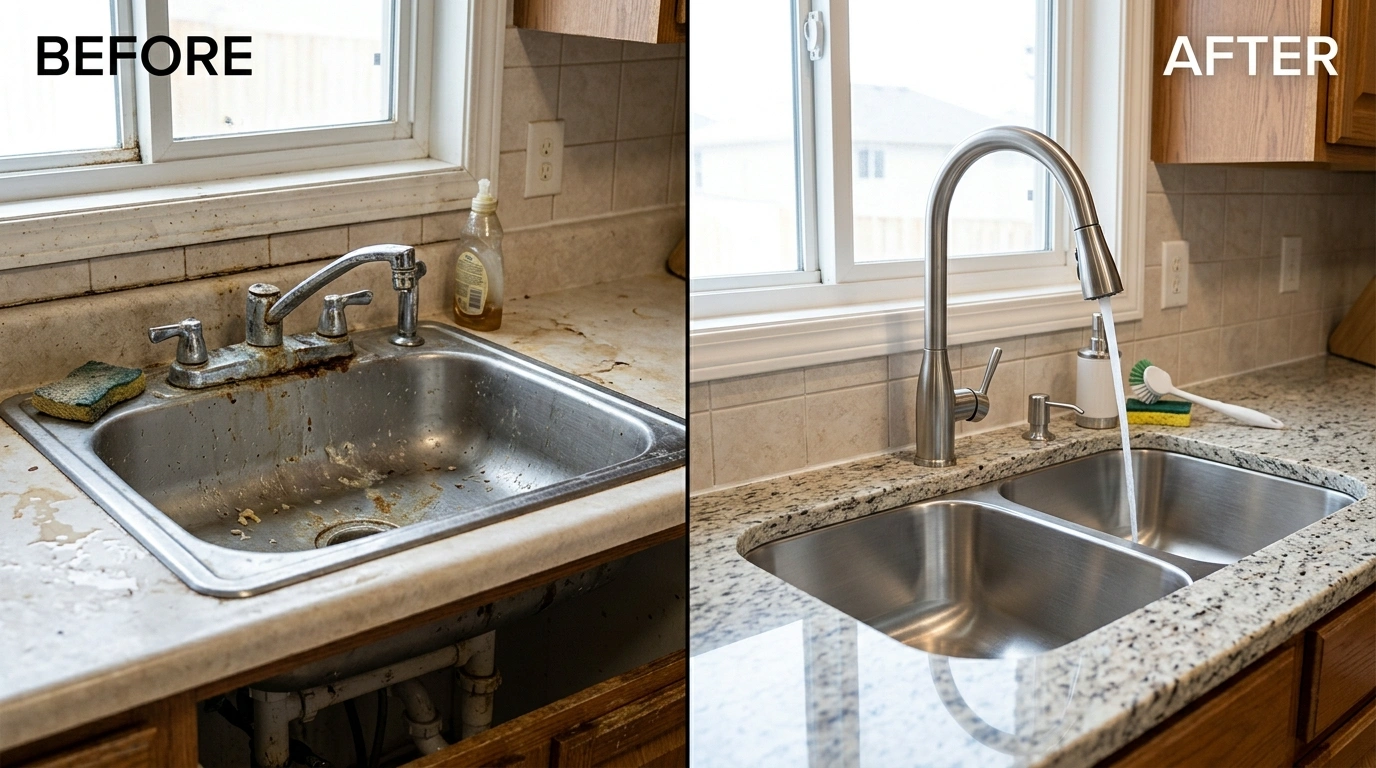
Routine Faucet & Sink Maintenance
Prevent Fixture Failures with Routine Faucet and Sink Service
Practical maintenance for Denton properties that want to avoid surprise leaks, low flow, and premature fixture replacement.
Faucets and sinks do not require annual certification in the same way as regulated plumbing systems, but regular inspection and maintenance can help identify small problems before they become larger repairs. Frequent use, aging seals, worn cartridges, corroded connections, mineral buildup, and seasonal temperature changes can all affect fixture performance.
Square Dent Plumbing can inspect fixtures, repair visible leaks, replace worn parts where appropriate, evaluate shutoff valves and supply lines, and help property owners decide when an aging fixture is better replaced than repeatedly repaired.
| Maintenance Task | Description | Suggested Timing | Benefit |
|---|---|---|---|
| Visual Fixture Inspection | Check for drips, corrosion, loose handles, pooling water, and cabinet moisture | As needed or during plumbing service | Identifies visible issues early |
| Faucet Flow Check | Inspect low pressure, uneven spray, aerator buildup, and irregular flow | When flow changes | Helps identify restrictions or worn components |
| Under-Sink Connection Check | Review supply lines, shutoff valves, drains, P-traps, and disposal connections | During service or before remodels | Helps reduce hidden leak risk |
| Drain Performance Review | Check for slow drainage, backups, odors, or leaks while the sink is draining | When symptoms appear | Distinguishes fixture leaks from drain problems |
| Repair-or-Replacement Assessment | Evaluate condition, age, parts availability, and recurring failures | When repair is needed | Supports a practical long-term decision |
Seasonal Fixture-Care Reminders
- Check outdoor-adjacent, garage, utility-room, and exposed plumbing areas before freezing weather.
- Inspect frequently used kitchen and bathroom sinks before holiday gatherings, tenant turnover, remodeling projects, or business busy seasons.
- Address recurring drips, weak flow, cabinet moisture, or corrosion early rather than waiting for a larger failure.
Maintenance Guidance
- Keep the cabinet below each sink reasonably clear so leaks can be noticed sooner.
- Avoid forcing an old shutoff valve repeatedly if it is stiff, corroded, or begins to leak.
- Clean accessible aerators carefully when debris affects flow, but call a plumber if low pressure continues.
- Save records for major fixture, drain, supply-line, and shutoff-valve repairs.